For parents of 1 to 6 year olds
Make the toddler years the best years.
Twenty-five science-backed tools and a three-day reset rooted in Danish pedagogy, each in its own short video lesson.
Self-paced · Lifetime access · 14-day money-back guarantee
Inside the course
Nearly 50 short lessons. Everything you need, nothing you don't.
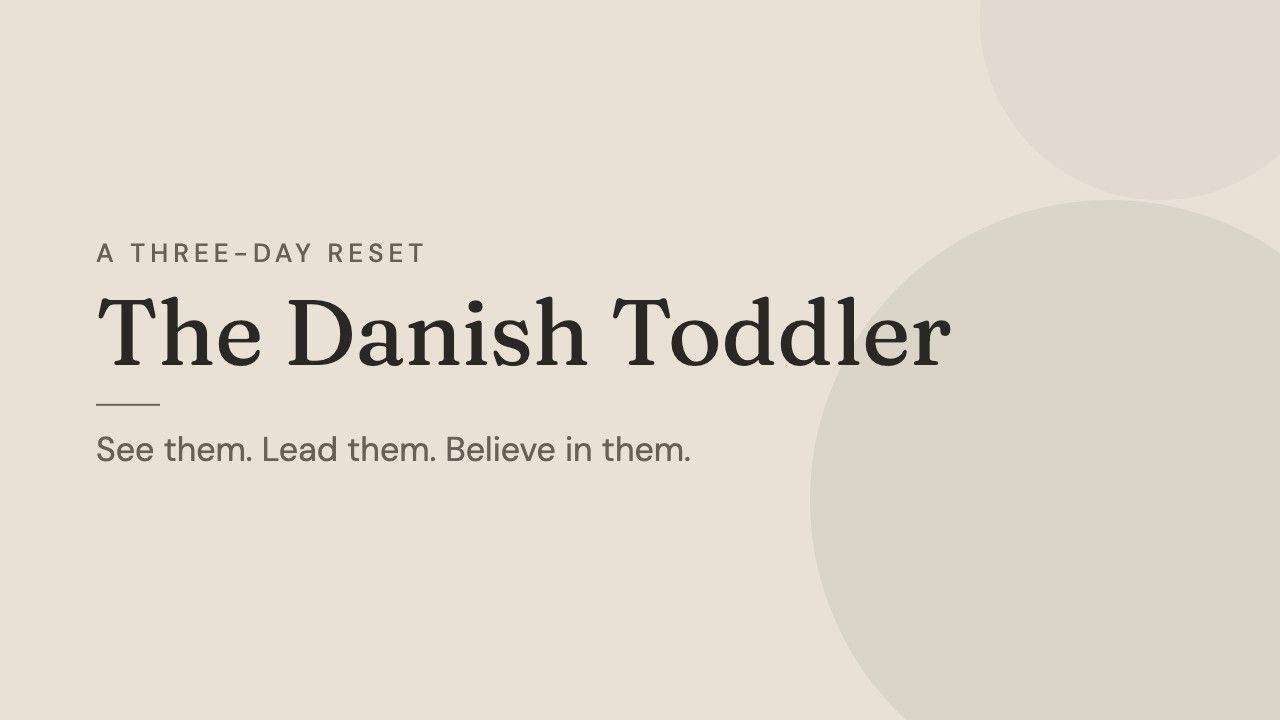
The 3-day reset
Nearly 50 short video lessons across Connect, Guide and Empower. In every part: 5 things to do today, 5 to stop doing, the science, and how Denmark does it.
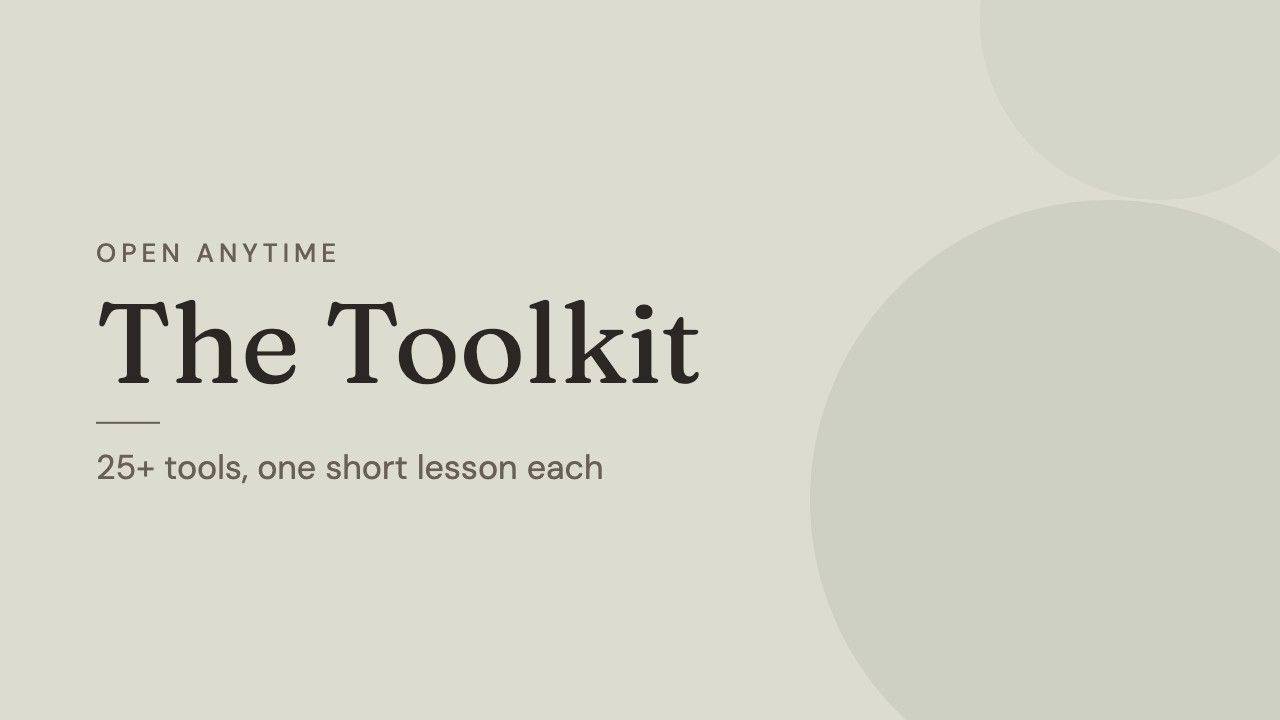
The Toolkit
25+ science-backed tools, each with its own video and the exact words to use.
The Toddler Problem Library
10 printable guides for tantrums, bedtime, eating, siblings and more.
Your pace, lifetime access. We suggest one part a day for a 3-day reset, but everything unlocks at once, so go as fast or slow as you like and rewatch any time.
From our sold-out first cohort
“
Even after living in Denmark for a few years, it was hard to name exactly why the Danish approach was so different, and why it works the way it does. This course was incredibly useful to have a framework, data and scientific concepts to refer back to.
Gloria · Pedagogist, Copenhagen
✦ A little tip ✦
We suggest watching with your partner, friend, or grandparent.
The 3-step framework
See them. Lead them. Believe in them.
From control, to cooperation, to capability.
Part one · Connect
“I see you.”
Fill their cup before the hard moments, set up your home so you say “no” less, and use play to get cooperation.
Part two · Guide
“I'm with you.”
Warm and firm in the same breath. Boundaries without battles, and what to do (and say) in a meltdown.
Part three · Empower
“I believe in you.”
Real jobs, less rescuing, and the everyday independence that builds confident kids.
The research behind it
Years of research, in one practical course.
Danish pedagogy
Denmark's Strengthened Pedagogical Curriculum (2018), Jesper Juul, Bo Hejlskov Elvén's low-arousal approach and forest kindergartens.
Connection and the developing brain
The Whole-Brain Child, Hold On to Your Kids, Parent-Child Interaction Therapy, Gottman's emotion coaching, Tronick's still-face research and Harvard's serve and return.
Play, cooperation and boundaries
How to Talk So Little Kids Will Listen, How to Talk So Kids Will Listen & Listen So Kids Will Talk, Siblings Without Rivalry, Playful Parenting, Baumrind's warm-and-firm research, Ross Greene and Juul's No!
Capability and independence
The Montessori Toddler, Deci & Ryan's self-determination theory, Carol Dweck, Sandseter's research on risky play and Satter's division of responsibility in feeding.
The 3-step framework and every tool and script are my own, written in my own words. If you love a tool, I'll tell you which book to read next.
Emma

Who's teaching
Hi, I'm Emma.
I'm a researcher (LSE and Duke) and a mum of two. We lived in Copenhagen for three years, where I watched Danish pedagogues raise calm, capable toddlers. So I spent years reading everything I could find, and turned it into tools that work on a Tuesday evening.
50M+
people reached by my work on Danish childhood
3 years
raising our family in Copenhagen
20+
books and studies distilled into one framework

Yours for every stage that's coming. Transform your family forever.
€150
One payment · Lifetime access · Start whenever you want
- Nearly 50 short video lessons, in 3 parts
- The Toolkit: 25+ tools with the exact words to use
- The Problem Library: 10 printable guides
- Lifetime access, rewatch any time
The 14-day calmer home guarantee
Try the tools for two weeks. If they don't make a difference, email me and I'll refund you in full. No forms, no questions.
Questions
Before you start.
I'm so busy. Will I really have time?
Yes. The lessons are short, so you can learn a tool while the kettle boils or listen during nap time. Most of the tools take seconds to use once you know them.
My child is 18 months, or 5. Will this work?
Yes. It's built for ages 1 to 6, and the tools adapt to each stage.
What if my child is going through a really intense phase?
That's often the best time to start. Use the Problem Library for specific moments, and repeat Part One whenever you need to. This course isn't a substitute for professional support. If you have concerns about your child's development or wellbeing, talk to your doctor or health visitor.
Not ready yet?
Watch the first lesson free.
The one tool most parenting advice leaves out, plus one change you can make at home tonight.
You'll also get a few short emails about the toddler years. Unsubscribe any time.